Table of Contents
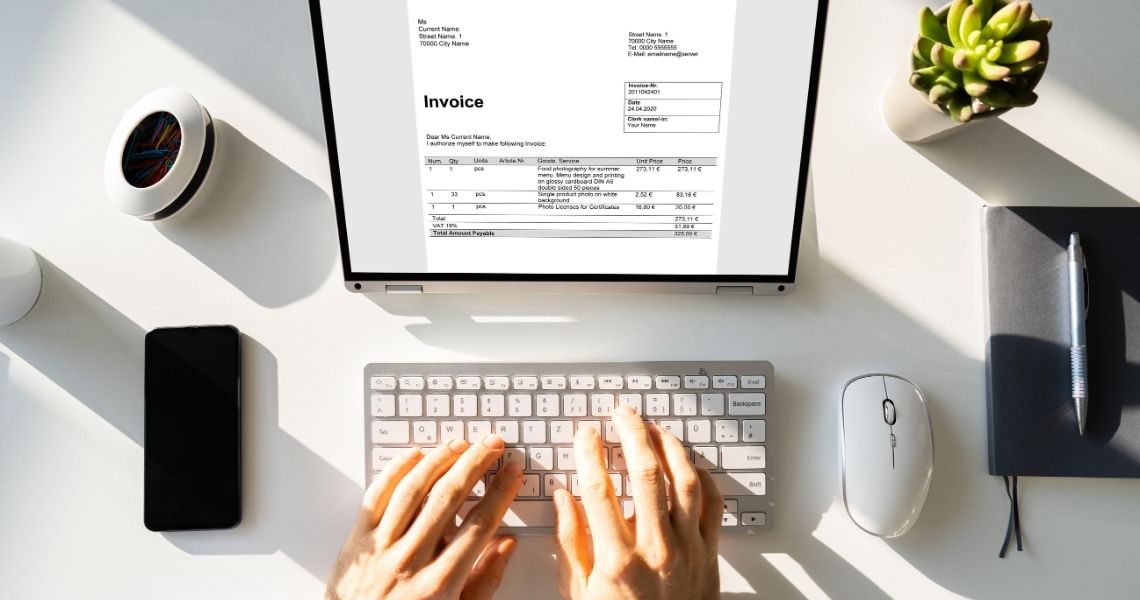
ToggleInventory and invoice software earns its place in a distributor’s toolkit the same way most necessary purchases do: after enough stock errors and late invoices have already cost real money. Somewhere between the third mis-picked order this month and an invoice that went out three weeks after the goods shipped, most owners stop asking whether they need a better system and start asking which one.
The pattern is familiar to anyone running a wholesale or manufacturing business in the $5 million to $30 million range in Australia. The warehouse count does not match what is sitting in Xero. An invoice waits on a delivery confirmation that never quite makes it back to the office. By the time someone notices, a customer has already queried the bill, the bank balance looks wrong, and next month’s reorder is based on a number nobody fully trusts.
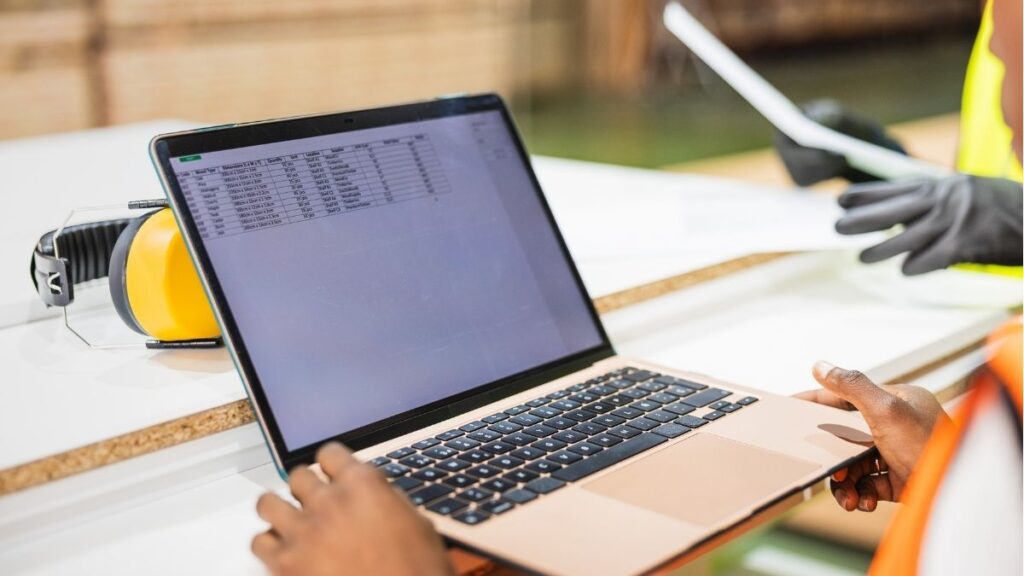
The driver behind both problems is usually the same one. Stock movement and billing were built and adopted as two separate processes, often on two separate systems, and nobody ever connected them properly. Fix that connection and the errors, and the delays tend to shrink together, because they were never really two different problems to begin with.
Why Stock Errors and Invoicing Delays Usually Have the Same Root Cause
A stock error and a late invoice look like different complaints on the surface, but they almost always trace back to the same gap: nobody has one live, trusted number for what has actually shipped.

When a warehouse team updates stock on a paper pick sheet or a standalone spreadsheet, that update has to be manually carried across to the accounting system before an accurate invoice can go out. Every manual step in that chain is a place where a quantity gets mistyped, a shipment gets forgotten, or an invoice sits in someone’s inbox waiting to be raised.
This shows up in a few consistent ways for growing distributors and manufacturers:
None of this reflects poorly on the people involved. It reflects a process built on manual handoffs between systems that were never designed to share data automatically.
What Inventory and Invoice Software Actually Changes
Inventory and invoice software removes the manual handoff between the warehouse and the accounts team by having both stock movement and billing draw from the same live record, instead of two separate ones that someone has to reconcile after the fact.
In practice, that means a sale, a pick, or a delivery updates stock on hand immediately, and the invoice is generated from that same transaction rather than typed up separately afterwards. For a business already using inventory and invoicing software like Cin7 Core alongside Xero, this is the difference between finding a discrepancy at month-end and never creating one in the first place.
| Where the Numbers Live | Disconnected Stock and Billing | Connected Inventory and Invoice Software |
|---|---|---|
| Stock Count | Last week’s spreadsheet or a warehouse tally sheet | Updated the moment a sale, pick, or delivery happens |
| Invoice Trigger | Raised from memory once someone remembers to | Generated automatically from the pick or delivery record |
| Cost of Goods on the Invoice | An estimate of last quarter’s average landed cost | The actual landed cost tied to that specific batch |
| Who Catches a Mismatch First | The customer, when the invoice looks wrong | The system, before the invoice is ever sent |
If you have typed inventory and invoice software for small business into Google at 11pm while trying to work out why this month’s stock count does not match the books, this is the gap that search is pointing at. It is rarely a bigger software budget that fixes it. It is having one connected inventory accounting source of truth that both the warehouse and the finance team work from.
What Getting This Wrong Costs a Growing Australian Business
Poor visibility between stock and billing does not just cause the occasional awkward customer call. It shows up directly in cash flow, gross margin, and how quickly you can close the books each month.

Globally, the numbers are large enough to be worth taking seriously. Out-of-stocks and overstocks together cost the global retail industry an estimated US$1.73 trillion in 2024, equivalent to roughly 6.5% of global retail sales, with Asia-Pacific accounting for about US$642 billion, or 37%, of that figure, the largest share of any region, according to IHL Group’s 2025 inventory distortion research. That is not a rounding error. It is what happens when businesses of every size do not know, in real time, what they actually have and what has actually sold.
On the invoicing side, the drag is measured in days rather than dollars, but it adds up to the same cash flow squeeze. In the June quarter of 2026, Australian small businesses waited an average of 22.9 days to be paid after issuing an invoice, down from 24.2 days in the March quarter, with payments arriving 6.0 days late on average, an improvement from 6.9 days late the previous quarter, according to Xero’s Australian Small Business Insights. Every one of those days is working capital sitting outside the business rather than inside it, and disconnected invoicing and inventory management software is one of the more common and more fixable reasons an invoice takes longer to go out than it should.
The costs that show up inside the business tend to fall into a few consistent buckets:
- Cash trapped in stock that looks fine on paper but is not moving. Without a live view of sell-through, slow stock keeps getting reordered at the same rate as everything else.
- Margin quietly eroded by wrong landed costs. If freight and duty are averaged rather than tracked per batch, the invoice can show a healthy margin on a line that is actually barely breaking even.
- A slower month-end close. Reconciling a spreadsheet against the accounting system by hand is one of the most common reasons month-end still takes three or four weeks instead of five to seven days.
- Customer disputes that damage trust. An invoice with the wrong quantity or cost is the fastest way to have a client start double-checking every future bill you send.
Where E-Invoicing Fits Into the Picture
Australia’s move toward e-invoicing is starting to change what “good” invoicing infrastructure looks like, and it is worth understanding even if you are not selling to government yet.
The ATO runs the Australian Peppol Authority, and eInvoicing is the digital exchange of invoice information between suppliers’ and buyers’ software through the secure Peppol network, described by the ATO as faster, more accurate, and more secure than sending invoices as PDFs by email. Once connected, a business can transact with everyone else on the Peppol network, which already includes over 400,000 Australian businesses, without needing to know what specific software each trading partner uses.
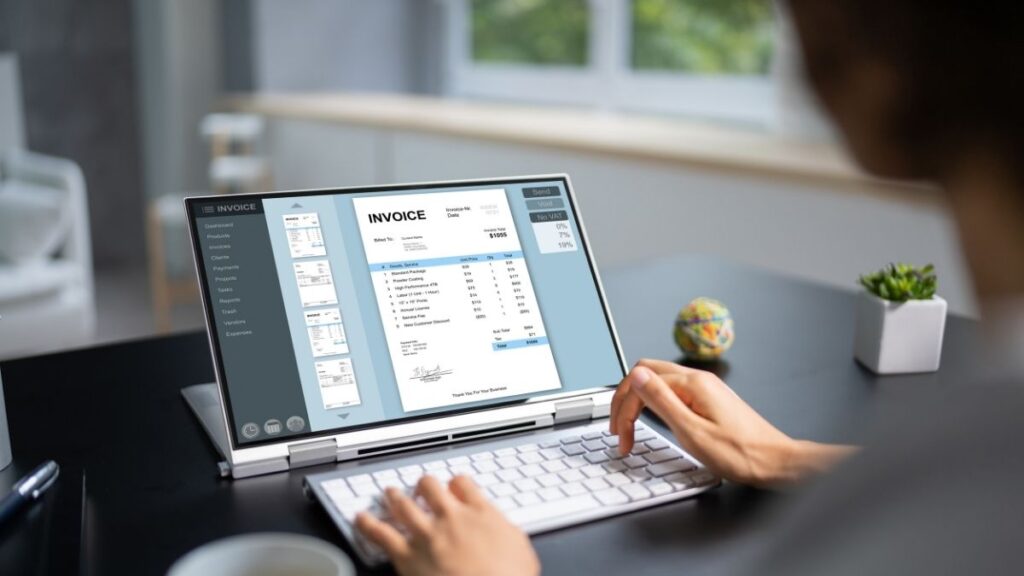
Government agencies are leading the push. Non-corporate Commonwealth entities have been required to receive Peppol e-invoices since July 2022 and pay valid e-invoices within five calendar days. Independent research commissioned by Avalara, an accredited Peppol service provider, and produced with the Centre for Economics and Business Research, estimated that full e-invoicing adoption across Australia could unlock up to A$22.5 billion per year in economic gains from productivity improvements, faster payments, and reduced fraud. That figure comes from a single commissioned study rather than a government forecast, so it is worth treating as an estimate of the scale of the opportunity rather than a guaranteed outcome, but the direction of travel, structured invoicing replacing PDFs and manual entry, is consistent across every source on this topic.
For a distributor or manufacturer, the practical takeaway is straightforward. Software that already generates structured, accurate invoices from a connected stock record is far better positioned to plug into Peppol as B2B adoption grows than a setup where invoices are still typed up manually from a spreadsheet. It is also worth knowing that stock valuation itself is a compliance matter, not just an operational one. The ATO requires businesses to value trading stock using the cost price, market selling value, or the replacement value method, and allows a different method to be chosen each year for different stock items. Getting this wrong at the end of the financial year affects taxable income directly, which is one more reason accurate, reconciled inventory records matter beyond day-to-day operations.
Choosing Invoicing and Inventory Management Software That Talks to Your Books
The fix is rarely a bigger spreadsheet or a more disciplined manual process. It connects the systems you already rely on so stock and billing data move in one direction automatically, rather than depending on someone re-keying numbers at the end of a long day.

For most Australian distributors and manufacturers turning over between $5 million and $30 million, that stack tends to look like this:
- Cin7 Core is the central inventory and omnichannel order management engine, syncing stock across warehouses, 3PLs, and every sales channel into one live pool. It is worth being clear that Cin7 Core is inventory and order management software, sometimes described informally as “ERP light,” rather than a full enterprise resource planning system.
- Xero or MYOB pulls the accurate cost of goods sold and stock valuation straight from that same connected data, rather than as a separate manual reconciliation step each month.
- Microsoft Dynamics 365 Business Central is the step up once a business has outgrown Cin7 Core plus an accounting platform and genuinely needs a full ERP, typically once production, multi-entity finance, or more complex reporting enters the picture. We go into this transition in more detail in our guide to ERP software for Australian businesses.
When comparing inventory and invoice software for small business options against this kind of setup, the feature list matters less than one specific test: does an invoice generated by the system reflect the actual stock movement that just happened, or does someone still need to check it against a separate record first? If the answer is the latter, the software has not actually solved the problem, no matter how modern the interface looks.
It is also worth having someone on the team who owns the reconciliation between stock and accounting on a weekly basis rather than only at month-end or stocktake. We’ve written more on why that role matters as stock volume grows in our piece on inventory management system issues that cost Australian businesses growth.
Final Thoughts
Inventory and invoice software will not fix a business that has no process at all, but for one that already has good people working around a system that was never built to connect stock to billing, it removes the single biggest source of avoidable errors and delays. Once stock movement and invoicing draw from the same live record, most of the reconciliation work that used to eat up a week of month-end simply stops needing to happen.
VNC Australia works with distributors and manufacturers to connect Cin7 Core, Xero, MYOB, and Microsoft Business Central to your accounting so stock and billing tell the same story in real time. Our inventory and finance sync and Cin7 integration work is built specifically for businesses that have outgrown a spreadsheet but are not ready for a full ERP overhaul.
Schedule a complimentary 30-minute consultation with the VNC Australia team: Book your call.
Frequently Asked Questions
Inventory and invoice software connects stock tracking and billing so that an invoice is generated directly from an actual stock movement, such as a pick, pack, or delivery, rather than typed up separately from memory or a spreadsheet. This keeps stock counts and financial records in agreement without manual reconciliation.
It removes the manual re-entry step where most errors happen. Instead of a warehouse team updating stock on paper and someone else later re-entering that information into the accounting system, one transaction updates both stock on hand and the invoice at the same time, so there is no gap where the two records can drift apart.
Inventory and invoice software, such as Cin7 Core paired with Xero, focuses specifically on connecting stock movement to billing and accounting. A full ERP system like Microsoft Business Central goes further, managing production, multi-entity finance, and broader operational workflows. Most distributors and manufacturers under about $30 million in revenue are well served by the former before they need the latter.
Over 400,000 Australian businesses are already registered on the Peppol network the ATO oversees, and government agencies are required to pay valid e-invoices within five days. Software that already generates accurate, structured invoices from connected stock data is far better positioned to plug into Peppol as adoption grows than a manual, spreadsheet-based process.
Two signs are usually enough on their own: month-end reconciliation regularly takes more than a week, or invoices are sometimes disputed because the quantity or cost billed does not match what the customer received. Either one suggests the manual handoff between stock and billing has become a genuine cost rather than a minor inconvenience. Our inventory and finance sync service is built for exactly this transition point.
Xero and MYOB are strong at the accounting side of the business, but neither is built as a dedicated inventory engine for multi-warehouse or multi-channel stock. Most Australian distributors pair Cin7 Core for stock and order management with Xero or MYOB for the financial reporting, so both systems stay in agreement automatically.
Most businesses feel this pain somewhere between $3 million and $10 million in revenue, once they are running multiple sales channels or warehouses and a spreadsheet can no longer keep pace with order volume. Past that point, the cost of a stock error or a late invoice tends to outweigh the cost of connecting the systems properly.