


Table of Contents
ToggleYour estimated landed cost is the number you need on the day a buyer asks for pricing, and that day almost always arrives while the container is still somewhere between Ningbo and Port Botany. The supplier invoice is sitting in your inbox in US dollars. The freight forwarder has sent a quote. The broker has not classified the goods yet. And your biggest retail account wants a price by Friday.
So someone opens last year’s spreadsheet, adds a rough percentage for “freight and duty”, and sends out an estimated landed cost that is really an educated guess. Sometimes it works out. Often the real bills land six weeks later, and the margin you promised the business on that order has shrunk by a few points, or disappeared, with nobody quite sure where it went.
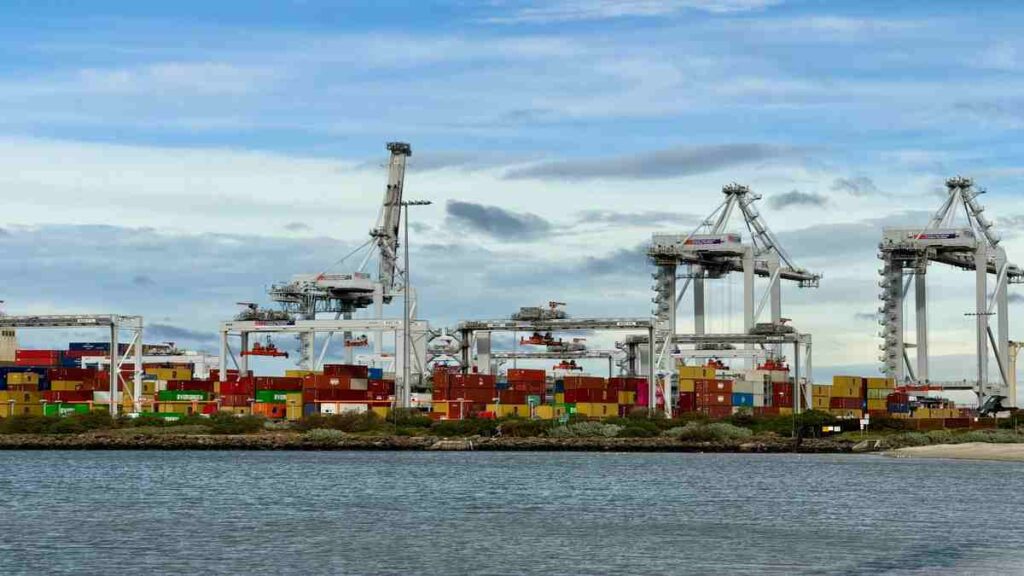
This guide is for owners, finance leads and operations managers at product-based businesses who import stock, whether you distribute, wholesale, manufacture or retail. It walks through what belongs in an estimated landed cost, which parts of the figure move between purchase order and port, how a landing cost calculation works line by line, and how to build a landed costs estimator your team will trust.
What an Estimated Landed Cost Actually Includes
An estimated landed cost is your best forecast, made before goods arrive, of everything it will cost to get a product onto your shelf and ready to sell. The supplier price is only the starting point. Under AASB 102 Inventories, the cost of purchase includes the purchase price, import duties and non-recoverable taxes, plus transport, handling and other costs directly attributable to acquiring the goods.
For an Australian importer, the estimated landed cost usually breaks down into these layers:
| Cost Layer | What It Covers | How Predictable It Is Before Arrival |
|---|---|---|
| Supplier price | Invoice value in the supplier’s currency | Fixed in currency, but the AUD amount moves with exchange rates |
| International freight and insurance | Sea or air freight to Australia and cover for that leg | Quoted in advance, often adjusted by surcharges |
| Customs duty | A percentage of the customs value, set by tariff classification and origin | Predictable once classification and origin are confirmed |
| Government charges | ABF Import Processing Charge and the biosecurity cost recovery charge | Fixed schedule, easy to budget |
| Broker, port and local costs | Customs broker fees, terminal and wharf charges, cartage to your warehouse | Varies by port, forwarder and shipment |
The first three layers usually make up the bulk of the estimated landed cost. The last two are smaller individually, but they are the ones most often forgotten when someone builds an estimated landed cost from memory.
Why the Number Moves Between Purchase Order and Port
Most of the gap between an estimated landed cost and the final one comes from a handful of predictable sources. Knowing them lets you decide where a quick estimate is fine and where you need to check before quoting a customer.
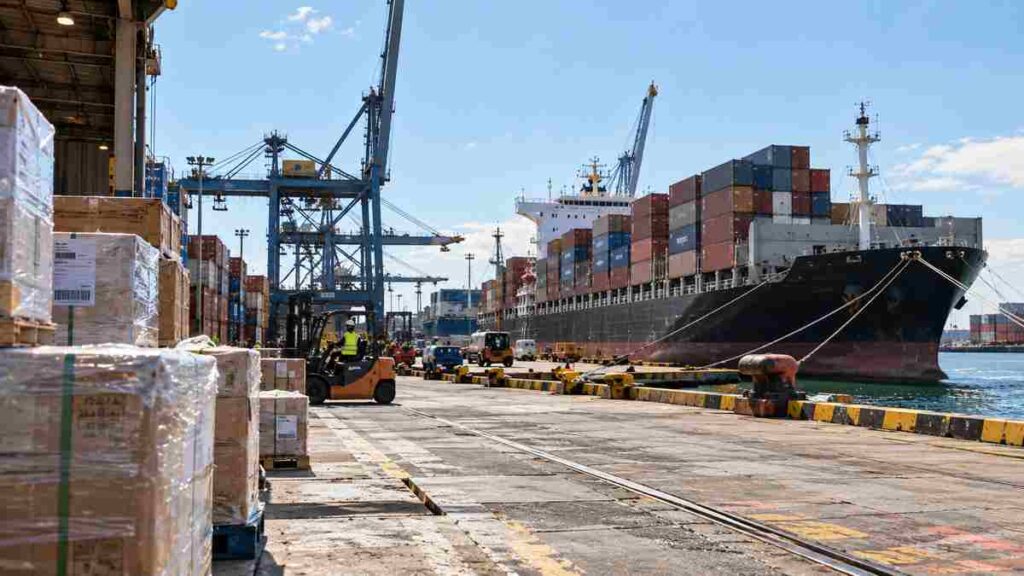
None of these are surprises once you know to look for them. The problem is that a single “freight and duty” percentage hides all five, so there is no way to tell which one caused a variance.
Estimated Landed Cost Calculation, Worked Through Line by Line
A landing cost calculation is easiest to understand with real numbers in front of you. The example below is illustrative only. The exchange rate, duty rate, freight and local cost figures are assumptions chosen for the exercise, not market data. Only the IPC and biosecurity charges are taken from the ABF’s current schedule.
Imagine you need an estimated landed cost for a sea shipment of 2,000 units with a supplier invoice of USD 40,000 on FOB terms, a 5% duty rate, and an assumed exchange rate of 0.65.
| Line | Calculation | Amount (AUD) |
|---|---|---|
| Customs value (FOB) | USD 40,000 ÷ 0.65 | 61,538.46 |
| Customs duty | 5% of customs value | 3,076.92 |
| International freight and insurance | Assumed forwarder quote | 6,000.00 |
| Import Processing Charge | Electronic, consignment ≥ $10,000 | 152.00 |
| Biosecurity cost recovery charge | Sea cargo | 71.00 |
| Broker, terminal and local cartage | Assumed combined figure | 2,400.00 |
| Estimated landed cost | Total, excluding GST | 73,238.38 |
| Per unit | ÷ 2,000 units | 36.62 |
The supplier price converts to about $30.77 a unit, so the estimated landed cost sits roughly 19% higher. That gap is the difference between a price that protects your margin and one that quietly gives it away.
Now change a single input. If the Australian dollar falls to 0.62 before the goods are exported, and every other assumption holds, the same landing cost calculation rises to about $76,364.94, or $38.18 a unit. That is an extra $1.56 on every unit, created entirely by timing. A good landed costs estimator lets you run that sensitivity check in seconds before you commit to a customer price.
Where GST Sits in the Picture
GST on imports catches a lot of businesses out, mostly because it looks like a cost on the paperwork. It affects your cash flow, but for a GST-registered business it usually stays out of the estimated landed cost per unit.
According to the ATO’s guidance on GST on imports, GST is 10% of the value of the taxable importation. That value is the customs value plus the amount paid for international transport and insurance (where not already included) plus any customs duty. In the illustrative example above, that comes to $70,615.38, which means about $7,061.54 in GST.

Here is how that plays out in practice:
The practical takeaway is to model GST in your cash flow forecast and leave it out of your estimated landed cost and pricing model. Mixing the two is one of the quickest ways to overstate your cost base.
Spreadsheet, Calculator or Cin7 Core: Choosing a Home for the Estimate
Where your estimated landed cost lives matters as much as how it is calculated. Each option below can work, but they suit very different volumes and levels of complexity.
| Option | Works Well When | Where It Starts to Struggle |
|---|---|---|
| Spreadsheet | A handful of suppliers, few SKUs, one person owns it | Version control, formula errors, no link to purchase orders or Xero |
| Online estimated landed cost calculator | Quick checks on a single shipment or a new supplier | Generic duty assumptions, nothing flows into your inventory values |
| Cin7 Core purchase costing | Regular imports, many SKUs, costs need to reach COGS accurately | Needs product weights, dimensions and account mapping set up properly |
An online estimated landed cost calculator is handy for a first look at a new product range. It becomes risky when the result is copied into a pricing sheet and never compared with what the shipment actually cost.
Cin7 Core supports landed cost allocation through the Additional Costs section of a purchase, a manual journal, or a separate invoice. Costs can be spread by line value, quantity, weight or volume, or allocated manually. That choice matters more than people expect. Freight spread by value will load a heavy, low-value product too lightly and a small, expensive one too heavily. For bulky mixed containers, volume or weight usually gives a truer per-unit result, which is why accurate product dimensions are worth the setup time. Setting up those allocation rules is one of the first things experienced Cin7 Core specialists check in an existing configuration.
Whichever option you choose, the landed costs estimator should be owned by someone in finance, not just purchasing. The estimated landed cost is a pricing input and an inventory valuation input at the same time.
Closing the Loop When the Real Invoices Arrive
An estimated landed cost only earns trust when it is compared with the actual result. Without that step, the same errors repeat on every shipment and nobody learns which assumptions are wrong.
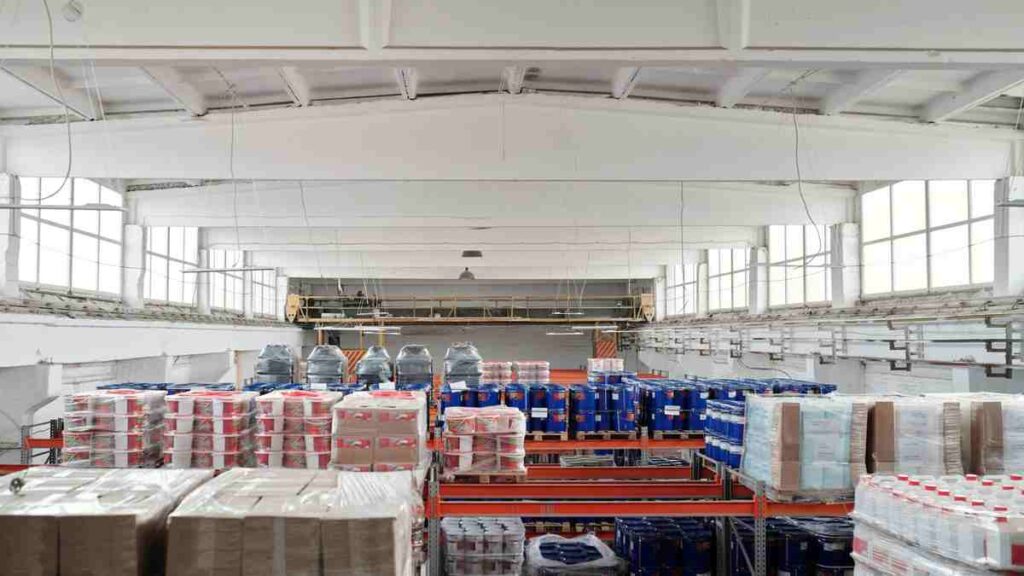
A simple monthly routine keeps the estimate honest:
In Cin7 Core, the journals for cost of goods sold, including purchase and landed costs, are generated when the sale shipment is authorised, according to Cin7’s documentation. That means a late or missing freight invoice can leave early sales carrying a cost that is too low. Businesses that review this monthly, often with support from specialist inventory accounting services, tend to catch it before it distorts a full quarter of margins. Distributors carrying thousands of SKUs across multiple suppliers may also find it worth reading how wholesale distribution accounting handles freight, duty and import charges at scale.
If your inventory and invoicing platforms are not connected, the loop gets harder to close. This comparison of invoice software options shows how a rough average landed cost can flow straight through to incorrect COGS on customer invoices.
Final Thoughts
An estimated landed cost is a decision tool as much as an accounting figure. For an importer, it is the number behind every customer quote, every reorder and every conversation about whether a product line is worth keeping. When it is built from clear cost layers, checked against the exchange rate on the day of export, kept separate from claimable GST, and compared with the actual result on every shipment, it becomes something your team can quote from with confidence.
The simplest version of this discipline is also the most durable: treat the estimate as a living input, give finance ownership of it, connect it to your stock management system, and review it every month so it gets a little more accurate with each shipment.
VNC works with product-based businesses across Australia, from manufacturers and wholesalers to distributors, retailers and e-commerce brands. We handle the accounting, the Cin7 integration and the inventory forecasting in between, so the estimated landed cost you quote on Friday matches the cost that lands in your books.
If you need help getting Cin7 Core set up to handle landed costs accurately, speak with our Cin7 Core Experts in Australia and see how the right setup can help keep your inventory costing and accounting aligned.
Schedule a complimentary 30-minute consultation with the VNC Australia team: Book your call
Frequently Asked Questions
It needs to be accurate enough that the final figure would not have changed your pricing decision. Set a variance tolerance for each estimated landed cost that suits your margins, then investigate any shipment that falls outside it by looking at FX, duty, freight and local costs separately.
The estimated landed cost is a forecast made before the goods arrive, using quotes, assumed exchange rates and expected duty rates. The actual landed cost is built from the final supplier, freight, customs and broker invoices once the shipment has cleared and been received.
Only if it knows the correct tariff classification and the country of origin of the goods. Duty rates depend on both, and preferential free trade agreement rates only apply when origin rules are met, so confirm classification with your customs broker before relying on the result.
Split it by volume or weight rather than by value when products differ a lot in size. Cin7 Core supports allocation by line value, quantity, weight, volume or a manual split, but weight and volume only work if product dimensions are set up accurately.
No. Review prices when the estimated landed cost for new orders moves beyond your agreed tolerance or when a pattern shows up across several shipments. Changing prices for every small variance creates noise for customers and your sales team.
Bring in help when your estimated landed cost and actual results regularly disagree, when you cannot tell which products make money after freight and duty, or when inventory values in your stock system and Xero stop matching. Those are signs the process, the system setup, or both need attention.